Trail Riding
Where You Ride
Groomed, marked trails (often maintained by clubs or park services)
Forests, lakes, open fields—less technical terrain
Usually lower elevations
Riding Style
Sit-down riding posture, similar to a motorcycle
Smooth steering and throttle control
Long-distance travel with consistent speeds
Experience
More relaxing, less physically demanding
Great for beginners and groups
Scenic and social—you can stop at lodges, towns, or warming huts
Gear & Sled
Trail snowmobiles with shorter tracks, better top speed, and smoother suspension
Windshields, heated grips, and storage for comfort
Pros
Easier learning curve
Great for endurance and comfort
Less risky—more predictable terrain
Cons
Can feel repetitive over time
Limited adventure/off-path opportunities
Crowded trails in peak season
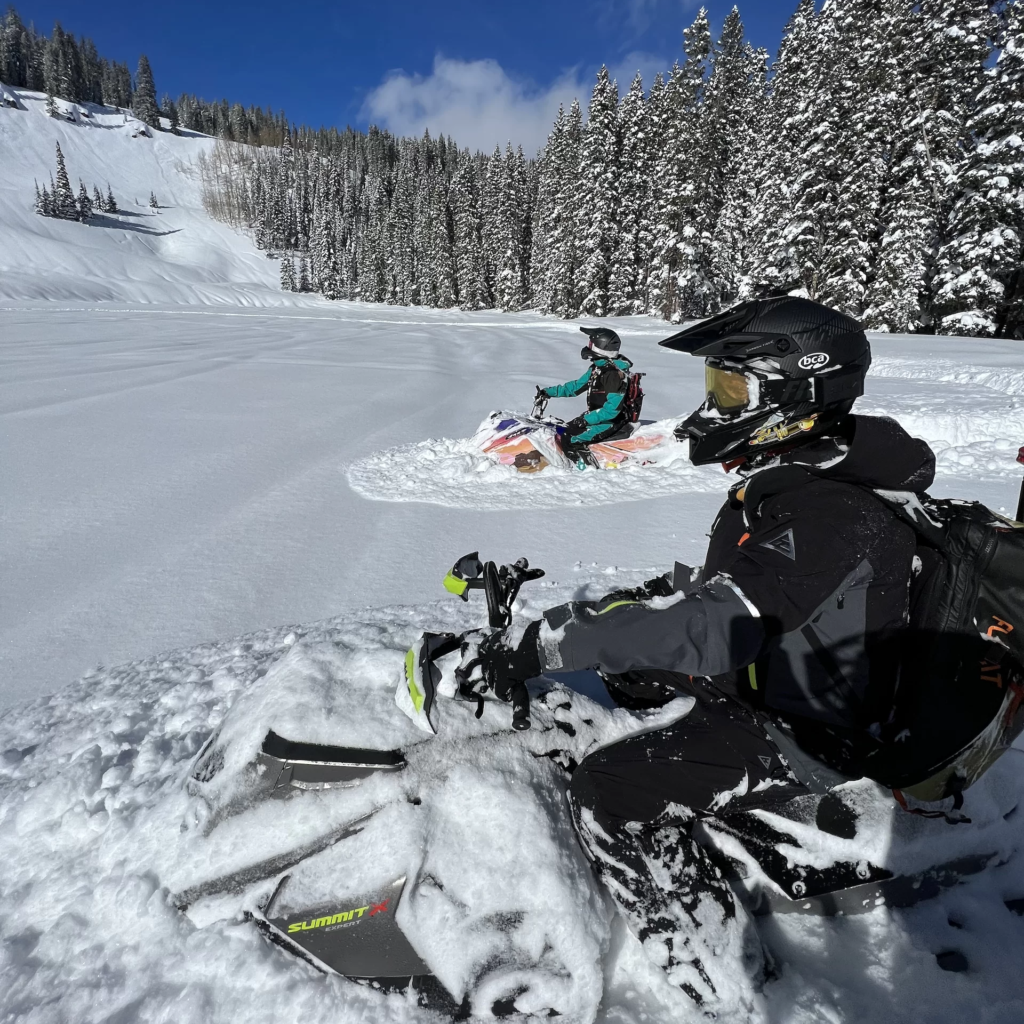
Mountain Riding
Where You Ride
Backcountry, unmarked terrain, high elevations
Deep powder, steep slopes, tight trees
Avalanche-prone zones
Riding Style
Stand-up riding, constantly shifting body weight
Technical riding: sidehilling, carving, throttle control, quick maneuvers
Physically demanding
Experience
Thrilling and intense—more like a workout than a cruise
Constantly changing snow and terrain
Less predictable, more adrenaline-driven
Gear & Sled
Mountain sleds with long tracks, deep lugs for floatation, lightweight chassis
Avalanche gear (beacon, probe, shovel), backpack, radio, etc.
Pros
Ultimate freedom and adventure
Deep powder = tons of fun
Stunning, remote scenery
Cons
Steeper learning curve
High avalanche risk (training required)
Requires more strength, stamina, and experience